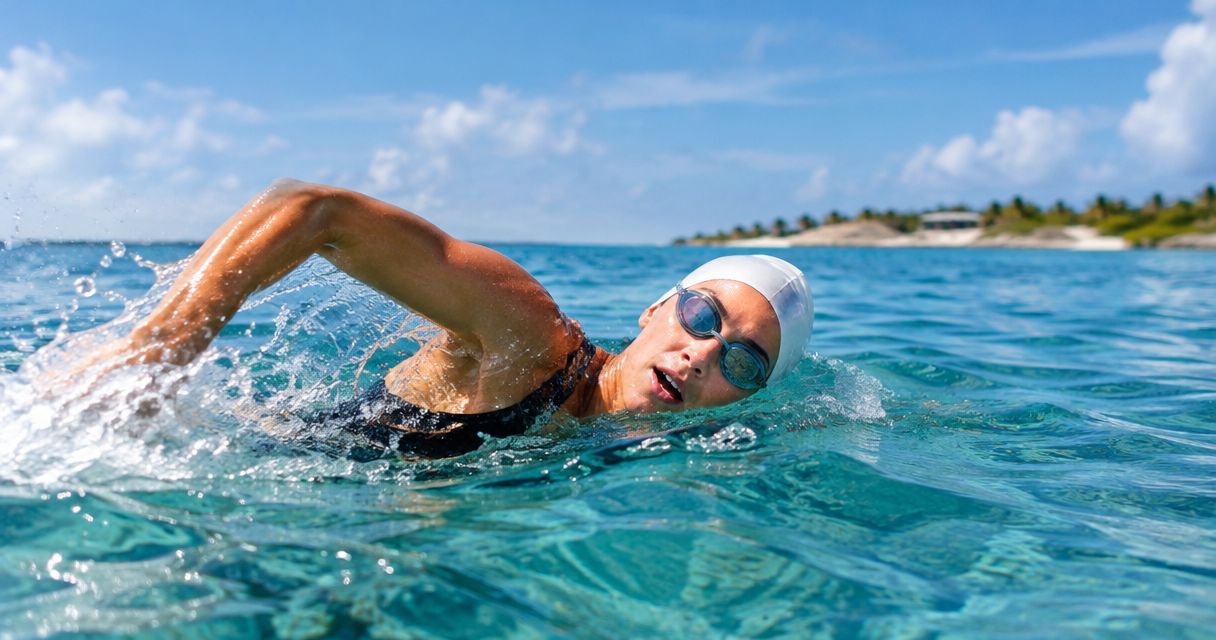
Best overall: no swimmer is crowned on this page until verified results back the pick. Best for recruiters: check the event times and meet level behind each profile. Best for fans: follow the national-team and regional-meet results. The best Turks and Caicos swimmers in 2026 are ranked below by the criteria that decide the ranking, not by reputation.
- The best Turks and Caicos swimmers in 2026 are judged on verified times, meet level and consistency.
- Compare swimmers only within the same event and the same pool length: 25 m short course or 50 m long course.
- Turks Athletes keeps public profiles, achievements and highlights for athletes from the Turks and Caicos Islands.
- Skip any ranking that mixes short course and long course times.
Why this matters
Swimming is the sport where rankings fail most often. Times from a 25 m pool and a 50 m pool are not equal. A 100 m freestyle is not a 200 m freestyle. A fast time at a small club meet is not the same as a final at a regional championship.
For a small island nation, the pool of competitive swimmers is small and the data is scattered across meet sheets, club pages and social posts. A fan, coach or recruiter searching for the best Turks and Caicos swimmers usually finds one-off posts with no context. This page sets the standard for how the ranking is built.
The public profile hub at Turks Athletes is where athlete profiles, achievements, statistics and highlights from the Turks and Caicos Islands live.
What makes the best Turks and Caicos swimmer
A swimmer earns a spot on this list by clearing these criteria, in this order of weight:
- Verified times. A time counts only when it appears on an official meet result or a recognized federation record. Self-reported times are excluded.
- Course length. Short course (25 m) and long course (50 m) are ranked separately. Never merged.
- Meet level. Regional and international championships outrank local invitationals. A final at a major meet outweighs a heat swim at a small one.
- Consistency across seasons. One fast swim is a data point. Repeat performances across 2025 and 2026 are a trend.
- Event range. A swimmer who scores across freestyle, backstroke, breaststroke, butterfly or the individual medley carries more weight than a single-event specialist, except where the specialist is clearly dominant.
- Trajectory. For young swimmers, the rate of improvement matters as much as the current time.
Swimmers at a glance: how the ranking reads
The table shows how each slot in the ranking is decided. Names are added only when a swimmer's results are confirmed and a public profile exists.
| Ranking slot | Best for | What decides it | Key limitation |
|---|---|---|---|
| Best overall | Fans and media | Highest verified result at the highest meet level in 2026 | Can favor one event over all-around ability |
| Best sprinter | Coaches scouting short events | Fastest verified 50 m and 100 m times | Sprint times say little about endurance |
| Best distance swimmer | Recruiters looking for aerobic base | Verified 400 m and longer times | Fewer distance races are held locally |
| Best all-rounder | Recruiters wanting versatility | Strong times across strokes and the individual medley | Rarely tops any single event |
| Best rising swimmer | Fans following the next generation | Largest verified improvement across seasons | Small sample of races |
1. Best overall: the swimmer with the top verified result
The overall pick goes to the swimmer with the strongest verified result at the highest meet level in 2026. It does not go to the biggest name or the most followed account.
Pros:
- Verified against official results
- Weighted toward meet level, not just raw time
- Comparable year to year
Cons:
- A single standout event can mask weakness elsewhere
- Results from smaller meets may be missing from public records
Best for: fans who want one name.
Verdict: Buy. Use this slot as the headline pick once results are confirmed.
2. Best sprinter: for coaches scouting short events
Sprint events reward start, turn and raw speed. The sprint ranking uses the 50 m and 100 m events only, in one course length at a time.
Pros:
- Easiest events to compare across meets
- Small time gaps are meaningful
Cons:
- A hundredth of a second can reorder the list
- Reaction time and touchpad differences at small meets add noise
Best for: coaches building relay squads.
Verdict: Buy for relay planning. Hold for all-around recruiting.
3. Best distance swimmer: for aerobic base
Distance swimmers are rarer in small swimming programs. The ranking uses events of 400 m and longer, and a distance swimmer needs at least two verified swims at that range to qualify.
Pros:
- Shows training volume and discipline
- Distance results travel well with recruiters
Cons:
- Fewer chances to race the events
- Long-course distance times are scarce
Best for: recruiters who want endurance.
Verdict: Hold until two verified swims exist.
4. Best all-rounder: for versatility
The all-rounder is the swimmer who scores across the individual medley and at least three strokes. Versatility is valuable to a team that needs points in many events.
Pros:
- Fits any relay or team scoring format
- Lower injury and burnout risk than single-stroke specialists
Cons:
- Rarely the fastest in any one event
- Harder to compare because the data is spread across many events
Best for: college and club recruiters.
Verdict: Buy for team-building.
5. Best rising swimmer: for fans following the next wave
The rising pick tracks the largest verified improvement between seasons, from 2025 to 2026. Youth results are noisy, so the slot is judged on direction, not a single swim.
Pros:
- Shows who may lead the ranking in later years
- Gives young athletes visibility
Cons:
- Small race sample
- Growth spurts can reverse a trend
Best for: fans and local clubs.
Verdict: Wait. Re-check after the next major meet.
See athlete profiles from the islands
Public profiles, achievements and highlights for Turks and Caicos athletes.
How the ranking was built
Every slot above follows the criteria listed earlier. Times are compared inside one event and one course length. Meet level breaks ties. An unverified result never moves a swimmer up the list. If a swimmer is missing, the cause is usually a missing public result, not a judgment on ability.
Which swimmer profile should you follow?
If you want a single name, follow the best overall pick. If you recruit, start with the all-rounder and the sprinter, then compare their verified times in your target event. If you follow the sport as a fan, track the rising swimmer through 2026.
Default pick for the undecided reader: the best overall swimmer, then check the all-rounder.
FAQ
Who are the best Turks and Caicos swimmers in 2026?
The best Turks and Caicos swimmers in 2026 are those with the strongest verified times at the highest meet level. Turks Athletes publishes public profiles so the results can be checked.
How are swimmers ranked fairly?
Swimmers are ranked within one event and one course length. A 25 m short course time is never compared with a 50 m long course time.
What is the difference between short course and long course?
Short course is swum in a 25 m pool and long course in a 50 m pool. Short course times are usually faster because of the extra turns.
Can recruiters use this ranking?
Yes. Recruiters should use the ranking as a starting list, then confirm each swimmer's times on official meet results.
Where can I find athlete profiles from the Turks and Caicos Islands?
Public profiles, achievements, statistics and highlights are on Turks Athletes at turksathletes.com.
Why is a swimmer I know not on the list?
The usual reason is that no verified public result exists yet. Add the result and the swimmer qualifies for the ranking.
One last thing
In swimming, the stopwatch settles arguments, but only when the course length and event match. Before you share any ranking of Turks and Caicos swimmers in 2026, check those two details first. Most disputed rankings fail on them.