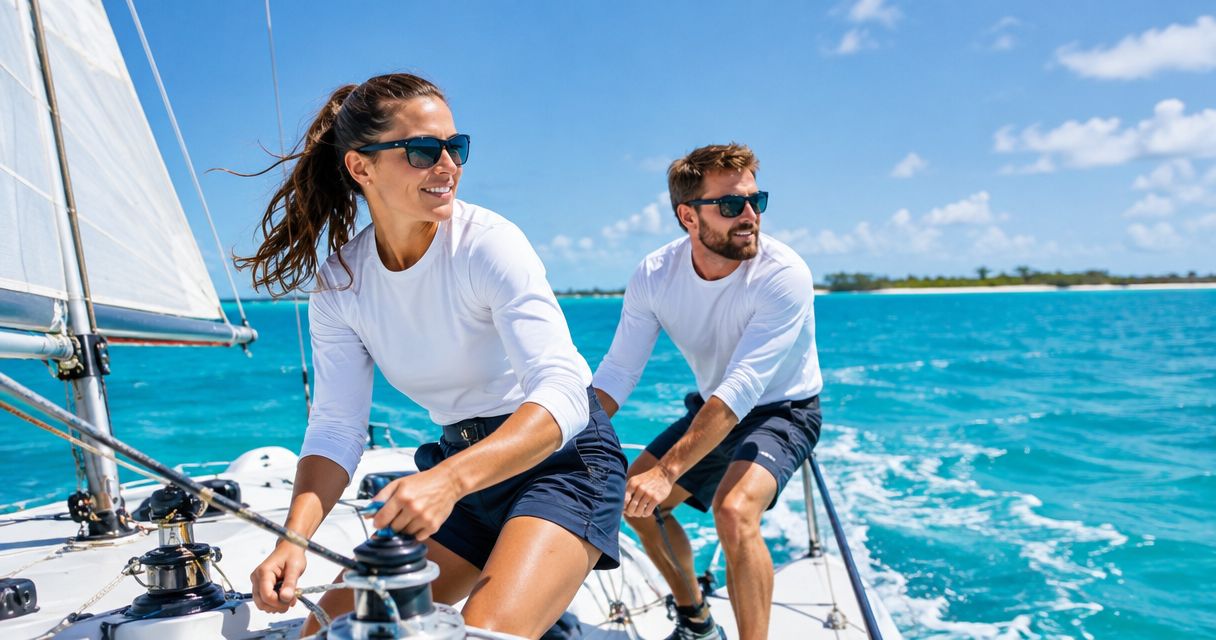
The best Turks and Caicos sailors in 2026 are the ones with verifiable race results, a documented pathway and a public profile you can check. This page ranks the sailing paths that produce those athletes and names the criteria to judge any individual by.
- Best Turks and Caicos sailors in 2026 are judged on verified results, not reputation.
- Youth dinghy racers, regatta competitors and sloop crews are three separate paths with different evidence.
- Recruiters should ask for dated race results and a public profile before shortlisting anyone.
- Turksathletes profiles are the place to check athlete achievements and highlights.
Best overall pick: the sailor with dated, checkable results across multiple events. Best for recruiters: the athlete with a public profile and highlight footage. Best for fans: the sloop and regatta crews who carry local racing tradition.
Why this matters
Sailing is the hardest sport on the islands to rank. Results are scattered across regatta notices, club pages and social posts, and there is no single scoreboard. Most "best sailors" lists are opinion.
This guide takes the opposite approach. It gives you a ranking framework you can audit, then maps the main sailing paths in the Turks and Caicos Islands. Individual athlete profiles live on Turksathletes, the sports media platform for athletes from the islands.
What makes the best Turks and Caicos sailor
Use these criteria to judge any name that gets put forward in 2026:
- Verified results. A result counts when it has an event name, a date and a finishing position you can trace.
- Consistency. One podium is a story. Repeated top finishes across seasons are a record.
- Level of competition. Local regatta wins and international starts are different evidence. Label them separately.
- Boat class experience. Dinghy, keelboat and traditional sloop racing reward different skills. Rank within a class first.
- Public profile. If a coach or recruiter cannot find the athlete's record in one place, the athlete loses visibility.
A sailor who scores on three of these five is a contender. A sailor who scores on all five is a clear pick.
Sailing paths at a glance
| Path | Best for | Standout evidence | Key limitation |
|---|---|---|---|
| Youth dinghy racers | Coaches and recruiters | Dated race results across seasons | Short records, fast-changing rankings |
| Regatta competitors | Fans and local media | Regatta finishing positions | Results often unpublished or scattered |
| Traditional sloop crews | Fans and heritage coverage | Crew roles and race history | Credit goes to the crew, not one name |
| Visiting-circuit sailors | Recruiters | Results outside the islands | Harder to verify from the islands |
1. Youth dinghy racers: best Turks and Caicos sailors for recruiters
Youth dinghy racing is where recruiters find measurable talent. Boats are small, fleets are one-design, and results compare cleanly from event to event.
Youth dinghy pros:
- One-design fleets make finishing positions directly comparable.
- Records build over several seasons, so progress is visible.
- Highlight footage is easy to capture from a chase boat or shore.
Youth dinghy cons:
- Records are short, so a single bad regatta moves the picture.
- Results are rarely collected in one public place unless the athlete has a profile.
Best for: college and development recruiters. Verdict: Follow. Ask for a dated result sheet and a highlight reel.
2. Regatta competitors: best Turks and Caicos sailors for local racing
Regattas are the public face of sailing in the islands. They draw crowds, and they are where a sailor's name becomes known before any ranking exists.
Regatta pros:
- Public, well-attended events create witnesses to every result.
- Racing against the same rivals year after year shows who is improving.
- Strong fan and community interest keeps coverage alive.
Regatta cons:
- Results are often announced on the day and never archived.
- Local wins do not translate directly to international standing.
Best for: fans and local media. Verdict: Follow. Treat a regatta result as strong local evidence, and say so when you cite it.
3. Traditional sloop crews: best Turks and Caicos sailors for heritage
The Caicos sloop is the islands' traditional working boat, and sloop racing keeps that heritage in competition. Here the unit of excellence is the crew: helm, trimmers and bailers working as one.
Sloop pros:
- Deep local tradition and a loyal following.
- Skill is visible from shore: trim, tacking and boat handling.
- Strong storytelling material for media and sponsors.
Sloop cons:
- Credit is shared, which makes individual ranking unfair.
- Few formal statistics exist, so profiles depend on local records.
Best for: fans, heritage coverage and storytellers. Verdict: Watch. Rank crews and helms, not single names.
4. Visiting-circuit sailors: best Turks and Caicos sailors for exposure
Sailors who race outside the islands give recruiters the most useful comparison, because the same event sheet ranks them against international fleets.
Circuit pros:
- Published results outside the islands are easy to verify.
- Competition level is clear from the fleet.
Circuit cons:
- Travel and entry costs limit how many sailors reach this tier.
- Home-island fans may never see these results unless someone reports them.
Best for: recruiters and scouts. Verdict: Follow. The clearest evidence of level, when the results are public.
See athlete profiles
Public profiles, achievements and highlights for athletes from the islands.
How these paths were ranked
Each path was scored against the five criteria above: verifiable results, consistency, level of competition, class experience and public visibility. Paths where an individual can show all five rank first for recruiters. Paths where tradition carries more weight than statistics rank higher for fans.
No individual sailors are named here. Names appear only when a result can be sourced, and a ranking of people without sources is a rumor.
Which Turks and Caicos sailor path should you follow?
- Recruiter: start with youth dinghy racers and visiting-circuit sailors.
- Fan: follow regatta competitors and sloop crews.
- Sailor building a profile: collect dated results, highlight footage and a single public page that holds both.
If you are undecided, default to the dinghy path. It produces the cleanest evidence in 2026.
Sailing is also one of several sports where islanders compete. For comparison, see how Turks and Caicos sprinters and swimmers are measured by timed, repeatable results. Sailing has no stopwatch standard, so profile quality matters more.
FAQ
Who are the best Turks and Caicos sailors in 2026?
The best sailors are the ones with dated, verifiable results across several events. Check each athlete's public profile before treating any list as final.
How do you rank sailors fairly?
Rank within one boat class first. Then compare verified results, consistency across seasons and the level of competition.
What is the best path for a young Turks and Caicos sailor?
Youth dinghy racing gives the most comparable results. One-design fleets let coaches and recruiters read finishing positions directly.
Why are individual sloop sailors hard to rank?
Sloop racing is a crew effort, so credit is shared. Rank the crew and the helm rather than a single name.
What do recruiters look for in a sailor?
They look for dated race results, boat class experience and highlight footage. A public profile that holds all three speeds up the decision.
Is a local regatta win enough to be called the best?
A regatta win is strong local evidence. It is not proof of international standing, so label it as local when you cite it.
One last thing
The sailors who get noticed are rarely the fastest. They are the ones whose results are easy to find. If you coach or race, put your dated results and highlights on one public page before the next regatta season.