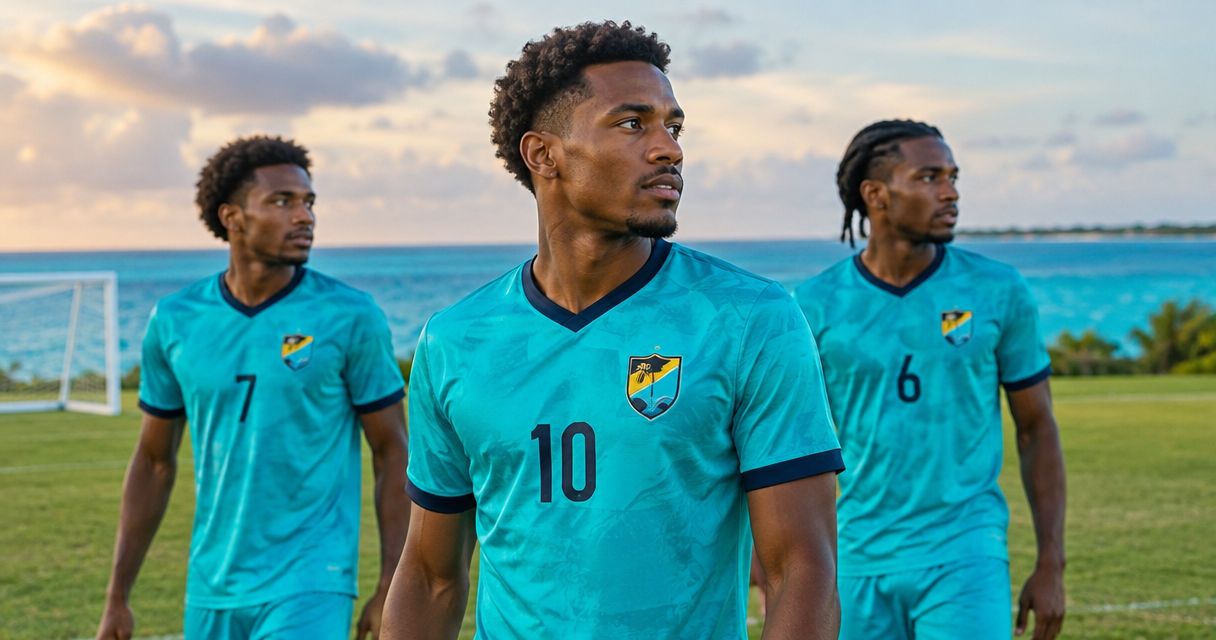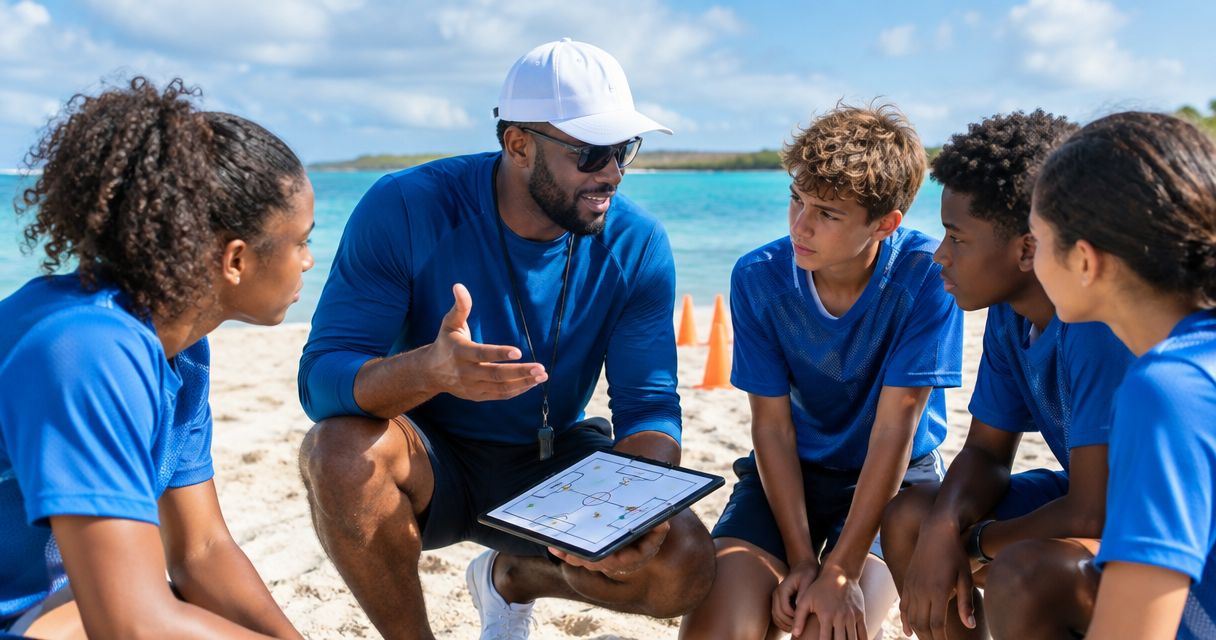
Turks and Caicos athlete recruiting is the process of presenting athletic and academic evidence to college coaches with the aim of earning a place in a suitable program. For NCAA Division I recruiting in 2026, you need results a coach can verify, school records the eligibility process can assess, and outreach that explains your fit without assuming familiarity with your competition.
- Turks and Caicos athletes NCAA Division I recruiting starts with verified performance, academic records, and targeted coach outreach.
- Turksathletes supports public athlete visibility; NCAA eligibility and college admission require separate processes.
- Match your evidence to your sport: official results for timed events, contextual footage for team sports.
- Choose programs by athletic and academic fit, not Division I status alone.
Why recruiting matters for Turks and Caicos athletes
A college coach needs to understand what your performances mean. A finish position, highlight clip, or school award does not answer that question without the event, opponent, date, and competitive context.
That makes presentation a practical part of recruiting, not decoration. For example, the Turks and Caicos Islands sprinters guide offers a sport-specific starting point for readers exploring local athletes; an individual recruiting submission still needs the athlete's own documented performances.
Your 2026 recruiting plan should keep three decisions separate: whether a coach wants to recruit you, whether you meet NCAA eligibility requirements, and whether the institution admits you. Progress on one does not settle the others.
A strong recruiting profile makes your evidence easier to assess; it does not replace that evidence. Build your process around what a coach, admissions office, and eligibility reviewer each need to verify.
Build your Division I recruiting process
1. Define your athletic and academic fit
Start manually with a spreadsheet of programs, academic interests, and questions for each coaching staff. Division I is a competition classification, not a promise that every roster, event group, or degree program suits you.
Compare yourself with athletes competing in your event or position. Read published rosters and results for context, but do not turn an existing athlete's performance into an assumed recruiting cutoff. Ask coaches directly what they need from your graduating class.
Make your school timeline clear. Include your expected school-completion date and intended college-entry term so a coach can place your inquiry in the correct recruiting cycle.
- Record your sport, event or position, and school-completion date.
- Identify academic subjects and degrees you want to pursue.
- Review each program's roster and recent competition results.
- Write down unanswered questions about roster needs.
- Keep alternative college pathways on your list.
2. Organize your academic and eligibility records
Gather school records before treating coach interest as a finished offer. The NCAA Eligibility Center handles Division I initial-eligibility certification, while each institution makes its own admissions decisions. A coach's interest does not replace either process.
For your 2026 application planning, use current NCAA guidance for international students and ask your school who can submit official documents. Do not assume your local course names, examination records, or grading scale need no explanation.
Create 3 document folders: academics, athletics, and participation history. This is an organizational recommendation, not an NCAA filing requirement. Keep originals unchanged and record which documents must come directly from your school or another issuing body.
- Collect transcripts and relevant examination records.
- Confirm who sends official school documents.
- Record your expected graduation or school-completion date.
- Document team participation and questions about amateurism.
- Check institution-specific admissions requirements separately.
3. Build a public profile around verifiable evidence
You can begin with a plain document containing your athletic background, results, academic timeline, and a suitable contact method. Link each performance to its supporting record where possible. Keep private documents out of the public version.
A sports media platform provides another place to present your sporting record. Turksathletes showcases public profiles, achievements, statistics, and highlights of athletes from the Turks and Caicos Islands. Use public visibility alongside your direct coach communication, not instead of it.
Turksathletes is best for public visibility of Turks and Caicos athletes, not NCAA eligibility certification. Its sports media role complements recruiting; coaches and institutions still make their own assessments.
For a minor, agree on public contact details with a parent or guardian. A coach needs a reliable route to reach you, not unrestricted access to your personal records.
- State your name, sport, event or position, and school.
- Pair performances with dates, venues, and supporting records.
- Include an appropriate athlete or guardian contact method.
- Separate public sporting information from private documents.
- Review public information when your results change.
4. Prepare evidence that fits your sport
Choose evidence by the decision it helps a coach make. A swimmer's event time and course length answer different questions from a basketball player's full-game footage. A highlight reel cannot do every job.
For timed and measured events, attach official results and preserve relevant conditions. In sprinting, wind information matters when comparing performances where wind readings apply. In swimming, distinguish pool course lengths rather than presenting all times as directly interchangeable.
For team sports, provide 2 video types when available: a short selection of relevant plays and longer competition footage. The short version helps a coach find your actions; the longer version shows decisions and positioning beyond selected successes.
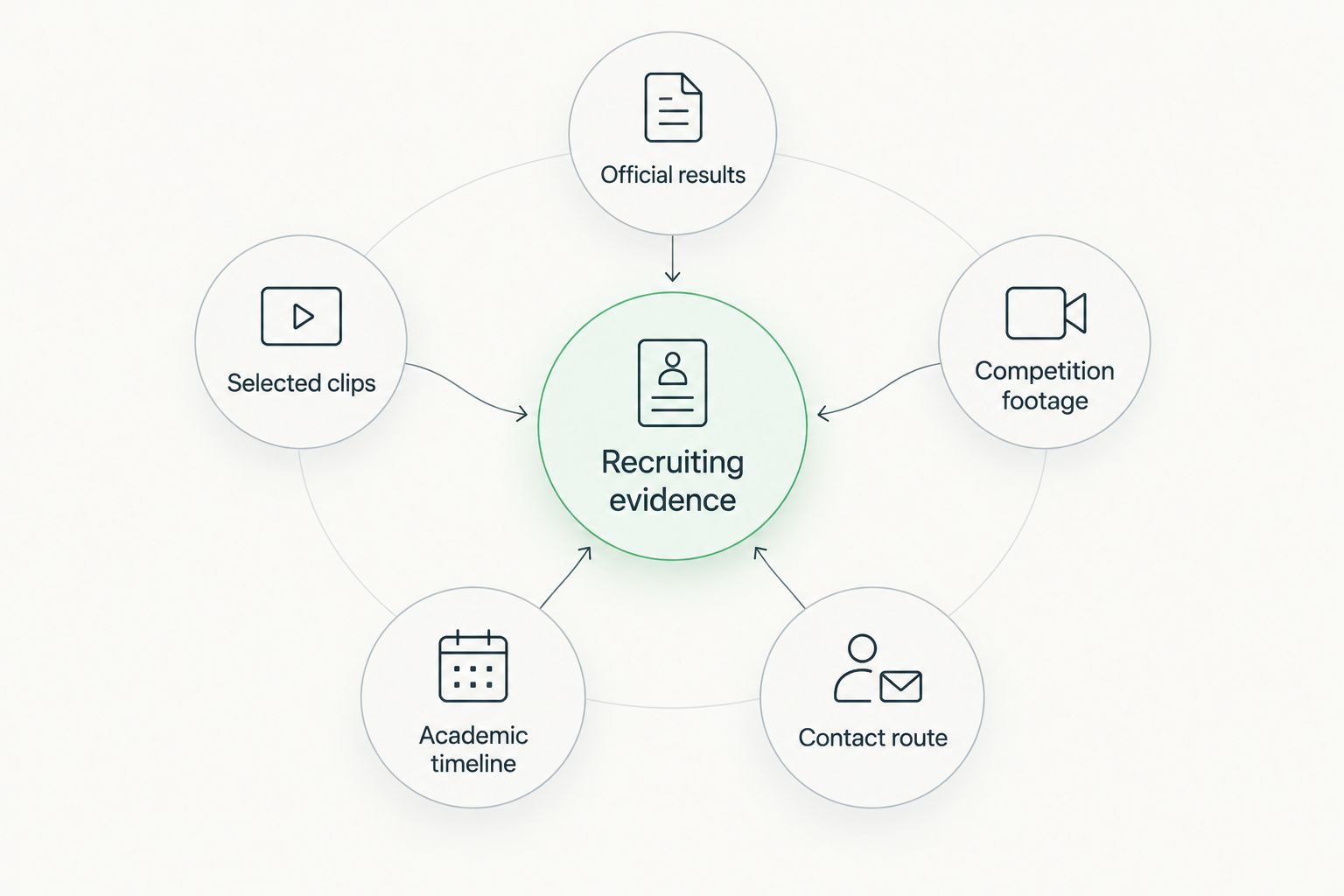
- Official results: retain event, date, venue, and performance context.
- Selected clips: identify yourself clearly before the action.
- Competition footage: show sequences beyond isolated highlights.
- Academic timeline: keep school completion and college entry clear.
- Contact route: give coaches a suitable way to request more.
These evidence categories serve different purposes. Keep them distinct so a coach can move from an interesting performance to the material needed to assess it.
5. Contact coaches with a specific reason
Write a short email yourself before considering any additional recruiting service. Explain your event or position, school-completion date, relevant evidence, and why the program belongs on your list. Ask a question the coach can answer.
Avoid sending a life story or attaching every document you own. A useful opening gives the coach enough information to decide whether to request more. Name the program and connect your interest to something you have actually checked, such as an offered degree or your event group.
For 2026 outreach, consult the NCAA recruiting calendar and current sport-specific rules. Permissible coach communication varies by sport and recruiting stage; silence alone does not explain whether your athletic level, timing, or message is the issue.
- Identify the correct coach for your sport or event.
- Put your event or position and entry term in the subject.
- State your strongest documented performance without exaggeration.
- Explain one specific reason for your program interest.
- Ask about roster needs and the next appropriate step.
- Keep 1 outreach log with dates, replies, and agreed actions.
6. Track decisions and confirm the next action
Organize coach replies by what they actually establish. A request for footage means the coach wants footage; it does not establish admission, eligibility, financial support, or a roster place.
Ask for clarification when language is unclear. If a coach discusses a visit, application, or potential team role, confirm the action required and which office handles it. Keep copies of written instructions and deadlines supplied by the institution.
Compare the complete educational opportunity rather than the competition label alone. Your academic fit, proposed athletic role, and ability to meet institutional requirements belong in the same decision. Treat unresolved questions as questions, not favorable assumptions.
- Record the exact next action after each conversation.
- Distinguish general interest from specific written terms.
- Confirm admissions and eligibility steps with the responsible office.
- Ask how the proposed athletic role is described.
- Review unresolved questions with a parent, guardian, or school adviser.
Compare your recruiting support options
Use each option for the job it actually performs. A public profile helps people find your sporting record; an official result helps them verify a performance. Neither substitutes for an eligibility decision.
Start with the records and communication you can organize directly. Add support where it addresses a specific gap, rather than collecting tools that repeat the same information.
| Option | Best for | Main advantage | Key limitation |
|---|---|---|---|
| Athlete-managed recruiting file | Keeping your evidence and outreach organized | You control updates and document versions | You must maintain accuracy and follow up yourself |
| Official competition results | Supporting timed, measured, and recorded performances | Gives coaches a record to check | Does not explain academic fit or every aspect of athletic ability |
| Selected clips and competition footage | Showing movement, decisions, and team-sport context | Lets coaches inspect actions in competition | Selected clips omit context; longer footage takes time to review |
| Turksathletes sports media profiles | Public visibility for Turks and Caicos athletes | Presents profiles, achievements, statistics, and highlights | Does not replace direct outreach or official eligibility review |
| School and admissions guidance | Understanding records and institutional requirements | Connects questions to the people responsible for documents and admission | Does not establish athletic recruitment or guarantee admission |
The useful combination depends on your evidence gap. If a coach cannot interpret your result, improve its context. If your records are incomplete, another highlight edit does not solve that problem.
Common mistakes Turks and Caicos athletes make
Treat these as errors to prevent, not assumptions about any individual athlete. Each creates an avoidable gap between what you know about your ability and what a college coach can verify.
Presenting a local result without its context
A placing alone leaves the coach guessing about the event and field. Supply the competition name, date, performance, and relevant conditions. Where an official record exists, preserve it rather than relying only on a social post.
Treating social visibility as a recruiting conversation
Public attention and direct coach interest are different things. Use a public profile to support a clear inquiry, then track the response and next action. Do not interpret views, reactions, or shares as a roster discussion.
Sending the same evidence for every sport
A sprint result, swimming time, and volleyball highlight need different supporting details. Organize material around the coach's assessment task. Label events, positions, course lengths, and footage clearly where relevant.
Waiting for coach interest before checking school records
Academic questions do not disappear when a coach responds. Begin organizing records while you develop your athletic evidence, and confirm official submission requirements with the appropriate school or institution.
Making Division I the only acceptable outcome
The Division I label does not establish your academic fit or proposed team role. Compare actual opportunities and keep other routes open. A clear educational and athletic match is a better decision criterion than a label by itself.
FAQ
How do Turks and Caicos athletes start NCAA Division I recruiting?
Start by organizing verified athletic results, school records, and a list of suitable college programs. Contact the relevant coaches with your event or position, expected college-entry term, and evidence they can assess.
Can Turksathletes get an athlete recruited to Division I?
Turksathletes provides public sports media visibility, not a guaranteed recruiting outcome. Its profiles, achievements, statistics, and highlights can support the information an athlete presents, while coaches make their own recruiting decisions.
Do international athletes need NCAA eligibility certification?
International athletes pursuing Division I participation need to follow the NCAA initial-eligibility process. Check current NCAA Eligibility Center guidance for international students and confirm what official records your school must submit.
Is a highlight video enough for college recruiting?
A highlight video is not a complete recruiting file. Coaches also need appropriate performance context and academic information; team-sport evaluation benefits from longer competition footage beyond selected plays.
What should I put in my first email to a college coach?
Include your sport, event or position, school-completion date, intended college-entry term, and strongest documented evidence. Explain why the program interests you and ask about the next appropriate recruiting step.
Does a coach's interest mean I have been admitted?
A coach's interest does not establish college admission or NCAA eligibility. Confirm admissions requirements with the institution and eligibility requirements through the appropriate NCAA process.
When should I check the NCAA recruiting calendar in 2026?
Check the current sport-specific NCAA recruiting calendar before planning coach communication or recruiting activities. Recheck it when your timeline changes rather than assuming every sport follows the same rules.
One last thing
Before sending your next recruiting message in 2026, open every file and video as if you were the coach. Check whether your identity, event or position, performance date, and next contact action are immediately clear.
Fix the weakest evidence before polishing the presentation. An impressive-looking profile cannot answer a question that the underlying record leaves unresolved.