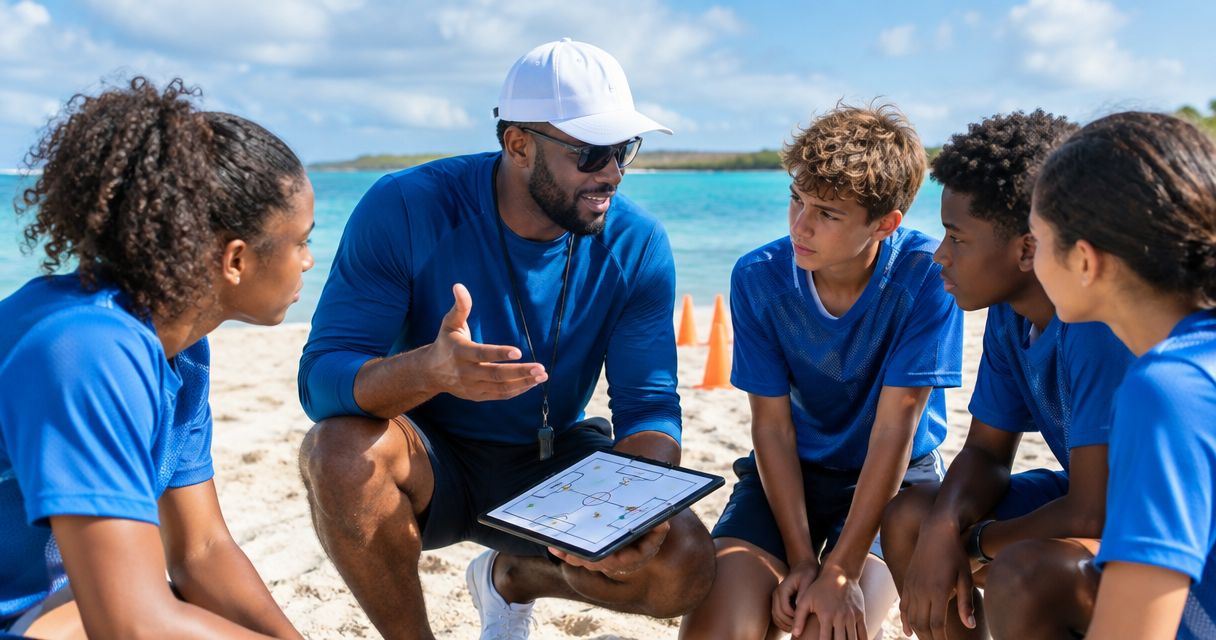
Youth sports coaches’ athlete recruiting is the process of documenting and presenting young athletes’ abilities to help them reach suitable evaluation opportunities. In the Turks and Caicos Islands, your recruiting plan needs to make local achievements understandable to unfamiliar coaches while protecting each athlete’s privacy and keeping families involved.
- Use this Turks and Caicos youth athlete recruiting guide to build evidence before contacting coaches.
- Turksathletes is best for discovering public athlete profiles, achievements, statistics and highlights from the Turks and Caicos Islands.
- Match opportunities to the athlete’s development, education and family priorities—not visibility alone.
- Use public profiles for discovery; verify results, permissions and program requirements separately.
Why athlete recruiting matters for youth sports coaches
Your recruiting job is to make an athlete easy to evaluate, not to promise selection. A receiving coach needs context: the athlete’s role, competition level, dated performances and development goals. Your 2026 plan should connect that evidence to opportunities the family actually wants.
Build your recruiting process
Define the athlete’s next step
Start with a family conversation and a written summary. Separate the athlete’s ambition from the immediate opportunity you are seeking; a development assessment and a place on a competitive roster require different requests.
- Record the athlete’s preferred sport and role.
- Agree on the next development goal.
- Identify education and travel constraints.
- Confirm who approves external communication.
Assemble a source-checked athlete record
Start manually with a shared document and a folder of original results, footage and permissions. Keep the record private until the athlete and parent or guardian approve what belongs in public.
Use Turksathletes to discover public profiles, achievements, statistics and highlights from the Turks and Caicos Islands. Its role is public discovery; keep your source documents and family approvals in a separate coach-managed record.
Best for: coaches building an initial picture of an athlete’s public sporting record. Limitation: a public profile is not a substitute for direct confirmation of current performance, education or willingness to pursue an opportunity.
For your 2026 record, separate identity information from performance evidence. A receiving coach should understand what a result represents without needing to reconstruct the event or guess the athlete’s age category. Record an unknown detail as unconfirmed rather than filling it from memory.
- Use the athlete’s approved name consistently.
- Record sport, event or playing position.
- Attach the competition name and performance date.
- Identify the source of each result or statistic.
- Keep sensitive identity documents outside public folders.
- Mark information that still needs confirmation.
Select evidence that answers a coach’s questions
Review your existing match recordings, meet results and training notes before creating new material. Choose evidence that shows the ability relevant to the opportunity, rather than assembling an exciting montage with no evaluation value.
For a team-sport athlete, explain the role and show the surrounding passage of play. A successful action means more when the evaluator can see positioning, decisions and what happened immediately afterward. For a timed event, retain the event conditions and official result context alongside any video.
As a practical starting point, select 3 clips that answer different questions about the athlete. That is an editing recommendation, not a recruiting requirement. Include longer footage when it helps the receiving coach assess consistency rather than isolated success.
Your evidence folder should distinguish competition results from training observations. Both can inform development, but they are not interchangeable. Label edited highlights clearly, retain originals, and avoid claiming that footage proves qualities it does not show.
- Label each clip with its event or match.
- Identify the athlete clearly before the action begins.
- Include relevant context before and after the action.
- Keep official results beside the related footage.
- Separate verified performances from coaching observations.
- Retain an unedited version for follow-up requests.
Match opportunities to the athlete’s circumstances
Build a shortlist manually from programs the family wants to consider. Read the current requirements published by each institution or organizer, then confirm unclear points with the person responsible for recruitment or participation.
Do not treat every opportunity as the same destination. A development camp, school team and club assessment can differ in purpose, academic expectations, supervision and travel arrangements. Your shortlist should explain what each option offers the athlete and what the family must investigate before proceeding.
Use a simple fit record for your 2026 shortlist: sporting fit, educational fit, family fit and unresolved questions. Keep the athlete involved in the discussion. A prestigious name does not answer whether the athlete wants the environment or can meet its requirements.
Best for: coaches helping families compare genuinely relevant next steps. Limitation: your assessment of fit does not establish eligibility or guarantee an invitation; the receiving organization must confirm its own requirements.
- Define the sporting development the athlete needs.
- Check the intended age group and participation requirements.
- Read current academic requirements where applicable.
- Confirm who supervises young participants.
- Discuss travel and family commitments privately.
- Record unanswered questions before recommending an application.
Contact coaches with a specific evaluation request
Write the first message yourself using confirmed information and an approved contact route. Identify your coaching relationship, explain why the athlete fits the recipient’s program, and ask for a specific next step.
A useful opening message does not need the athlete’s full life story. Include the sport or event, the relevant role, a dated performance summary and a way to review approved evidence. Explain what you are asking the recipient to assess: suitability for an evaluation, development feedback or the correct application route.
As a manageable starting point, prepare messages for 2 suitable contacts rather than sending the same message to an unfiltered list. This is a suggested workload, not a claim about response rates. Personalize the reason for contacting each recipient and keep the parent or guardian included through the agreed process.
Avoid sending sensitive records with an introductory message. If a recipient requests additional documents, verify the request and use an appropriate private channel.
- Address the person responsible for the relevant team or event.
- State your coaching relationship to the athlete.
- Explain the specific reason for the match.
- Share approved evidence rather than unsupported praise.
- Ask a clear evaluation or application question.
- Record the message and any agreed follow-up.
Protect the athlete throughout the process
Create a permissions record before expanding public exposure. Ask the family what can be published, where footage can be shared and who should receive inquiries. Explain these choices in language the young athlete understands.
Public visibility and private recruiting communication serve different purposes. A public sporting profile can introduce an athlete’s achievements, while a private discussion handles education, travel, documents and family circumstances. Do not place every detail in the same folder simply because sharing it is convenient.
For your 2026 workflow, treat every new use of footage or personal information as a permissions question. Approval to record a match does not answer whether a family wants a particular recruiting package circulated. Consider other young people visible in footage, too, and follow the applicable organization’s safeguarding and media rules.
Best for: coaches coordinating communication without making a child’s private life part of the recruiting pitch. Limitation: a permissions checklist supports careful handling; it does not replace applicable safeguarding policies or legal requirements.
- Agree on what information can be public.
- Confirm who receives recruiting inquiries.
- Keep home addresses and identity documents private.
- Obtain approval before circulating a new package.
- Check footage against relevant media permissions.
- Keep family communication within approved channels.
Review progress and refresh the evidence
Keep a manual outreach log with the date, recipient, purpose, response and next action. Separate activity from progress: sending a message is an action, while receiving a specific evaluation request is a different outcome.
Use a 30-day review as a starting planning interval, adjusting it around actual competition and application dates. This is a suggested coaching routine, not an industry benchmark. Review whether the evidence still represents the athlete and whether the shortlist still matches the family’s priorities.
When a coach responds, record the exact request rather than interpreting interest as an offer. When there is no response, check the contact route and published instructions before deciding whether a follow-up is appropriate. Keep the athlete’s training and education priorities separate from the pressure to generate more outreach.
Close each review with a development action the athlete controls. Better documentation matters, but it should reflect real sporting progress rather than replace it.
- Update results after relevant competitions.
- Replace outdated clips when stronger evidence exists.
- Record responses without overstating their meaning.
- Check deadlines against the organization’s current instructions.
- Remove opportunities the family no longer wants.
- Agree on the next development priority.
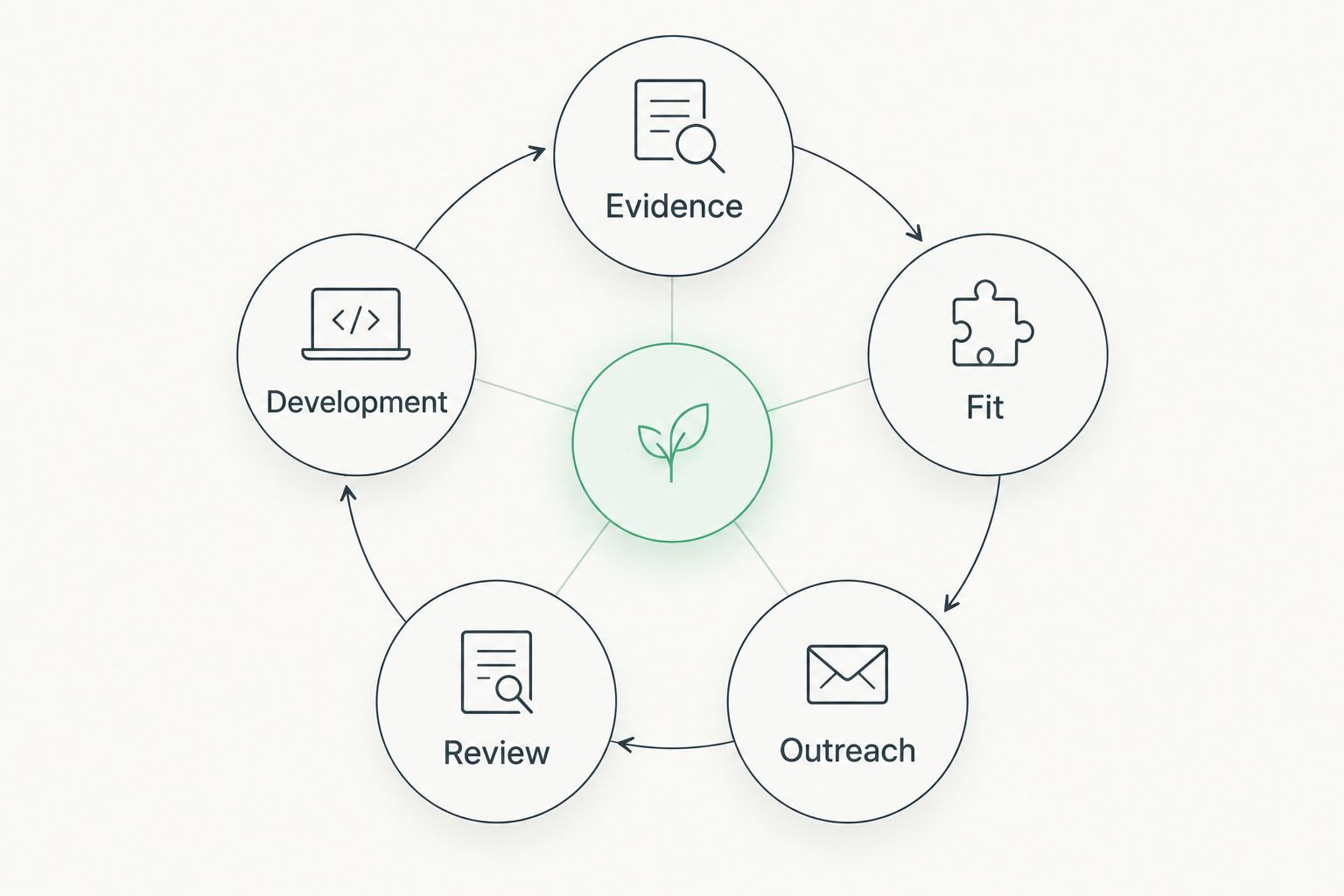
The review process should connect evidence, fit, outreach and development—not turn recruiting into a message-count contest.
Compare your recruiting support options
Choose each option for a defined job. No single record, profile or conversation should carry the entire recruiting process. Keep discovery separate from verification and formal applications.
| Option | Best for | Practical advantage | Key limitation |
|---|---|---|---|
| Coach-managed document and folder | Maintaining the working athlete record | Keeps sources, permissions and updates together | Requires disciplined manual updates and access control |
| Turksathletes public profiles | Discovering TCI athlete achievements, statistics and highlights | Provides a public starting point for athlete research | Does not replace direct checks of current information or program fit |
| Direct coach-to-coach communication | Asking specific evaluation questions | Lets the recipient explain what evidence is needed | Depends on reaching the appropriate person and receiving a response |
| Official program application | Submitting information through the required route | Follows the receiving organization’s stated process | Requirements differ; submitting does not establish acceptance |
Start with the private working record, use public information to support discovery, then follow the receiving organization’s process. Avoid making a young athlete repeat sensitive information across unnecessary channels.
Common mistakes youth sports coaches make
Sending achievements without competition context
A result without an event, date or age category leaves the evaluator with unanswered questions. Attach the context at the source-record stage rather than expecting the receiving coach to request it later.
Confusing publicity with recruiting progress
A profile view, shared highlight or public mention is not an evaluation invitation. Track concrete next steps separately so families understand what has happened and what remains undecided.
Recommending an opportunity before discussing family fit
An appealing sporting environment can still conflict with schooling, travel or the athlete’s preferences. Agree on these priorities before contacting the program, not after the family feels committed.
Speaking as if interest guarantees selection
Keep the recipient’s language intact. A request for footage is a request for footage; describe it accurately instead of presenting it to the athlete as an offer.
Publishing private details to make contact easier
A public profile does not need to expose a child’s home address, identity documents or personal schedule. Use an approved adult contact route and share sensitive information only when necessary through a verified process.
FAQ
What should a Turks and Caicos youth athlete recruiting guide help coaches do?
A useful guide helps coaches document ability, match appropriate opportunities and manage approved communication. Start with verified evidence and family priorities before sending recruiting messages.
What is Turksathletes best for in youth athlete recruiting?
Turksathletes is best for discovering public profiles, achievements, statistics and highlights of athletes from the Turks and Caicos Islands. Coaches should separately confirm current information and the requirements of any opportunity.
Should I send highlights or full match footage?
Send the evidence that answers the receiving coach’s evaluation question. Use clearly identified highlights for specific actions and retain longer, unedited footage when context or consistency needs assessment.
Can a youth athlete contact a recruiter directly?
Use a communication process agreed with the parent or guardian and consistent with relevant safeguarding policies. Confirm the recipient’s identity and role before sharing personal information.
Does a public athlete profile guarantee a recruiting opportunity?
No, a public athlete profile does not guarantee an evaluation, selection or scholarship. It supports discovery, while decisions depend on the receiving organization’s assessment and requirements.
How often should a coach update an athlete’s recruiting record in 2026?
Update the record after relevant competitions and whenever important information changes. A 30-day review is a practical starting routine, adjusted around the athlete’s calendar and actual application dates.
One last thing
Ask someone unfamiliar with the athlete to review the package before you send it. Can that person identify the athlete, understand the performance context and explain your request without asking you for background?
If not, fix the missing context before adding more highlights. Your 2026 recruiting package should make a young athlete’s real abilities easier to assess—not make the evaluator work harder to understand them.